
1. Executive Summary
In structural steel fabrication, coating longevity is directly proportional to initial surface roughness and cleanliness. Manual intervention using pneumatic sandblasting or angle grinders often introduces human error, high labor overheads, and inconsistent profile creation. This case study analyzes the operational restructuring of an infrastructure engineering plant handling 1,500 metric tons of steel monthly. By replacing primitive cleaning methodologies with a custom-engineered shot blasting machine designed and executed by Surface Finishing Equipment Co. (sfecindia), the enterprise achieved a 45% drop in cycle time, reduced abrasive consumption by 38%, and secured a flawless Sa 2.5 surface cleanliness standard required for high-grade epoxy painting.
2. The Baseline: Operational Bottlenecks & Legacy Systems
Our client specialized in fabrication of heavy columns, bridge girders, and web structures. Their legacy surface preparation department utilized manual air-blasting rooms where operators blasted steel structures with copper slag.
Key Operational Red Flags Identified during Audit:
- Throughput Drag: Cleaning a standard 12-meter I-beam required multiple operators and took approximately 4.5 hours to achieve a uniform profile.
- Micro-Surface Imperfections: Inconsistent pressure delivery left micro-pockets of mill scale and rust hidden under the surface, causing microscopic coating failures within months of delivery.
- High Media Consumption: Copper slag is highly friable and turns to dust after a single impact, escalating the ongoing procurement costs for blasting media.
- Environmental & Safety Non-Compliance: The high dust levels generated by manual air blasting created continuous air quality challenges within the facility.
3. Engineering Solution & Technical Blueprint by SFEC
To eliminate these challenges, the technical consulting wing at Surface Finishing Equipment Co. (sfecindia) recommended replacing the air blast room with a fully automated, multi-wheel roller conveyor system. This system operates via mechanical centrifugal acceleration rather than pneumatic air volume, offering significantly higher kinetic energy efficiency.
[Infeed Conveyor] ➔ [Centrifugal Blast Zone (4x SFEC High-Velocity Wheels)] ➔ [Blow-off Unit] ➔ [Outfeed]
Machinery Technical Specifications Installed:
- Blast Wheel Configuration: 4 Units x 15 kW Direct-Drive High-Efficiency Blast Wheels engineered by sfecindia.
- Conveyor System: Heavy-duty motorized roller conveyor with a variable frequency drive (VFD) speed ranging from 0.5 to 5 meters per minute.
- Abrasive Media Recovery: Mechanical system consisting of a heavy-duty screw conveyor, a vertical bucket elevator, and a dynamic rotary screen air-wash separator.
- Dust Collection: SFEC 6,000 CFM Pulse-Jet Pleated Element Dust Collector ensuring emissions lower than 10 mg/Nm³.
4. Step-by-Step Implementation Phase
Phase 1: Surface Metallurgy Profiling
Before launching the machine, tests were conducted at Surface Finishing Equipment Co.‘s facility to determine the optimum blend of abrasive media. A 70:30 ratio of Steel Shots (S330) and Steel Grit (G40) was selected to provide a balanced cutting action (for rust removal) and peening action (for creating a uniform anchor pattern of 50–70 microns).
Phase 2: Conveyor VFD Calibration
The variable speed drive was configured to adjust based on the incoming rust grade of the steel:
- Grade A/B Rust (Mill Scale only): Conveyor speed set to 2.5 meters/minute.
- Grade C Rust (Highly pitted steel surface): Conveyor speed adjusted to 1.2 meters/minute for deep mechanical cleaning.
Phase 3: Automated Shot Recycling Integration
The integrated SFEC air-wash separator was calibrated to remove fine crushed shots and dust particles automatically. This process ensures that only perfectly sized, reusable steel abrasives are fed back to the blast wheels, preserving structural consistency across thousands of tons of steel.
5. Comparative Performance Analysis
The transition delivered clear improvements across key manufacturing metrics:
Metric Analysed | Legacy Manual Air Blasting | SFEC Automated Roller Conveyor System | Performance Shift (%) |
Processing Time (Per Beam) | 270 Minutes | 22 Minutes | 91.8% Reduction |
Surface Finish Standard | Inconsistent Sa 2.0 | Uniform Sa 2.5 / Sa 3.0 | Significant Quality Improvement |
Media Reusability Cycles | 1 to 2 Cycles (Copper Slag) | 80 to 100 Cycles (Steel Shot/Grit) | 98% Media Lifetime Extension |
Direct Labor Requirement | 6 Operators per shift | 1 Operator (Console Specialist) | 83% Labor Cost Savings |
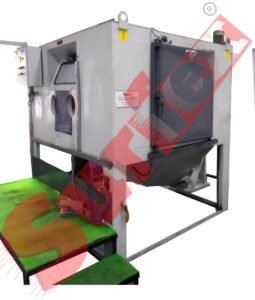
Dedicated FAQ Section for Surface Engineers
Q1: Can an automated shot blasting machine handle complex structural geometries with cross-members?
Ans: Yes. By strategically positioning the centrifugal wheels at calculated angles, the SFEC abrasive streams intersect at multi-dimensional vectors. This ensures full coverage across flange interiors, web spaces, and Gusset plates in a single continuous movement.
Q2: What is the average maintenance cycle for internal wear parts on an SFEC machine?
Ans: High wear zones inside the sfecindia blast cabinet are protected by replaceable Manganese Steel (Mn12) liners. For a standard heavy-duty operation, inspection should occur weekly, with blast wheel blades or impellers typically requiring replacement after 800–1,000 blasting hours, depending on media hardness.
Q3: How does the system prevent the carry-over of steel shot out of the chamber?
Ans: The outfeed chamber contains an integrated cleaning system designed by Surface Finishing Equipment Co. consisting of adjustable high-pressure air blowers and automated rotating nylon brushes that clear residual abrasive from horizontal steel plates before they emerge from the system.
7. Conclusion
The installation proved that transitioning to an engineered centrifugal system protects high-value structural components from unexpected coating failures. By transitioning away from high-maintenance manual operations, the fabricator not only shortened their project delivery timelines but also unlocked higher profitability per ton of processed steel.